
Vol. 01–06 · Audio essays · October 2026
Lacquer — CoProducer Journal. Loudness is not taste. It is a contract with the store.
Essays for people who bounce masters, not moodboards. Each piece opens with a sentence a search engine or an assistant can quote — then the session advice underneath.

Mix sounds muddy? It’s the low-mid pile-up, not one bad track
Why a mix sounds muddy when no single track does: the 200 to 500 Hz band piles up across keys, guitar, snare and vocal. Measured a master-bus cut against small cuts on the tracks that don't need the band, with the script.
Auto-Tune sounding robotic? Slow the retune speed and keep the vibrato
Why pitch correction sounds robotic: a fast retune speed flattens vibrato and turns slides into semitone steps. Measured how retune speed and center-only correction change pitch accuracy, vibrato and glides on a sung line, with the script.
Hum in your recording? Notch 60 Hz and its harmonics, not just the low end
Why a high-pass filter barely touches mains hum: most of a hum's energy sits in its harmonics, not at 60 or 50 Hz. Measured how much hum a high-pass, one notch and a full set of narrow notches remove, and what each costs the vocal, with the script.
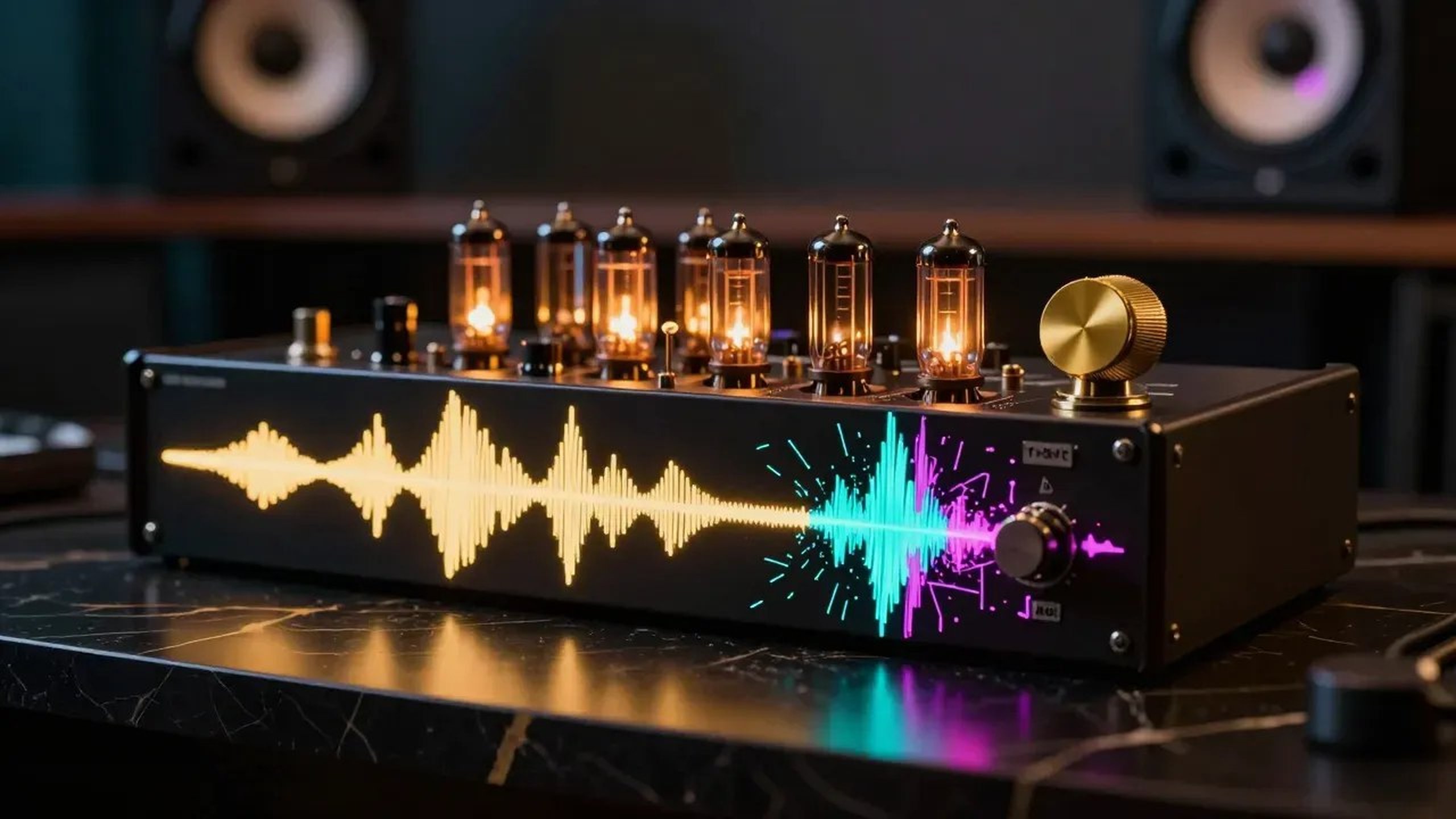
Saturator making the highs harsh? Turn on oversampling
Why a saturator or clipper makes hats and vocals grainy: distortion creates harmonics above the sample rate's limit and they fold back down as off-key tones. Measured fold-back at 1x, 2x, 4x and 8x oversampling, with the script.
Limiter distorting the bass? Slow the release
Why a fast limiter release makes 808s and bass fuzz and crackle: it recovers inside a single bass cycle and reshapes the waveform. Measured distortion at 1 to 150 ms release, what a short hold does, and what it costs in loudness, with the script.
Copy-pasted vocal double sounds mono? Sing a real second take
Why duplicating a vocal and panning it hard left and right doesn’t make it wide: an identical copy is just a louder center, and nudging it a few ms turns it into a comb filter. Measured correlation, mono sum and tone damage, with the script.
Sidechain pumping out of time? Set the release from the tempo
Why a sidechain duck feels late or makes the bass vanish: the release doesn’t fit the tempo, so the bass is still ducked when the next kick hits. Measured at 140 and 90 BPM, with a script that shows how much each release time leaves behind.

Why −18 dBFS? Gain staging into analog-style plugins
Why the level you hit an analog-modelled plugin with changes its sound, and why −18 dBFS keeps coming up. Measured on a simple saturation model: harmonics, THD and what five plugins in a row add up to. Script inside.

Should you normalize on export? Turn it off before mastering
Why the normalize option in your DAW’s export window works against a mix headed for mastering: it fills the headroom, can push true peak over 0 dBFS and gives every version its own gain. Measured on a synthetic main mix and instrumental. Script inside.


Song ending cut off when you export? Let the tail ring past the last bar
Why the end of your song gets cut off on export and how to fix it: run the export range past the last bar until the reverb and delay tails die, check the file ends in silence, then trim the silence, not the tail. Tail math and a script inside.

808 sounds off-key? Find its real note, then tune it to the song
How to tune an 808 to the key of your song: measure the note of the sustained tail, not the punch or the filename, then set coarse and fine tune so it lands on the root. Note table and script inside.

Panned parts get quieter in mono? That’s your pan law, not your ears
What pan law is and why it matters: a centered sound is turned down on both sides so panning doesn’t change its loudness. Fold to mono and the center jumps up to 3 dB. Table and script inside.
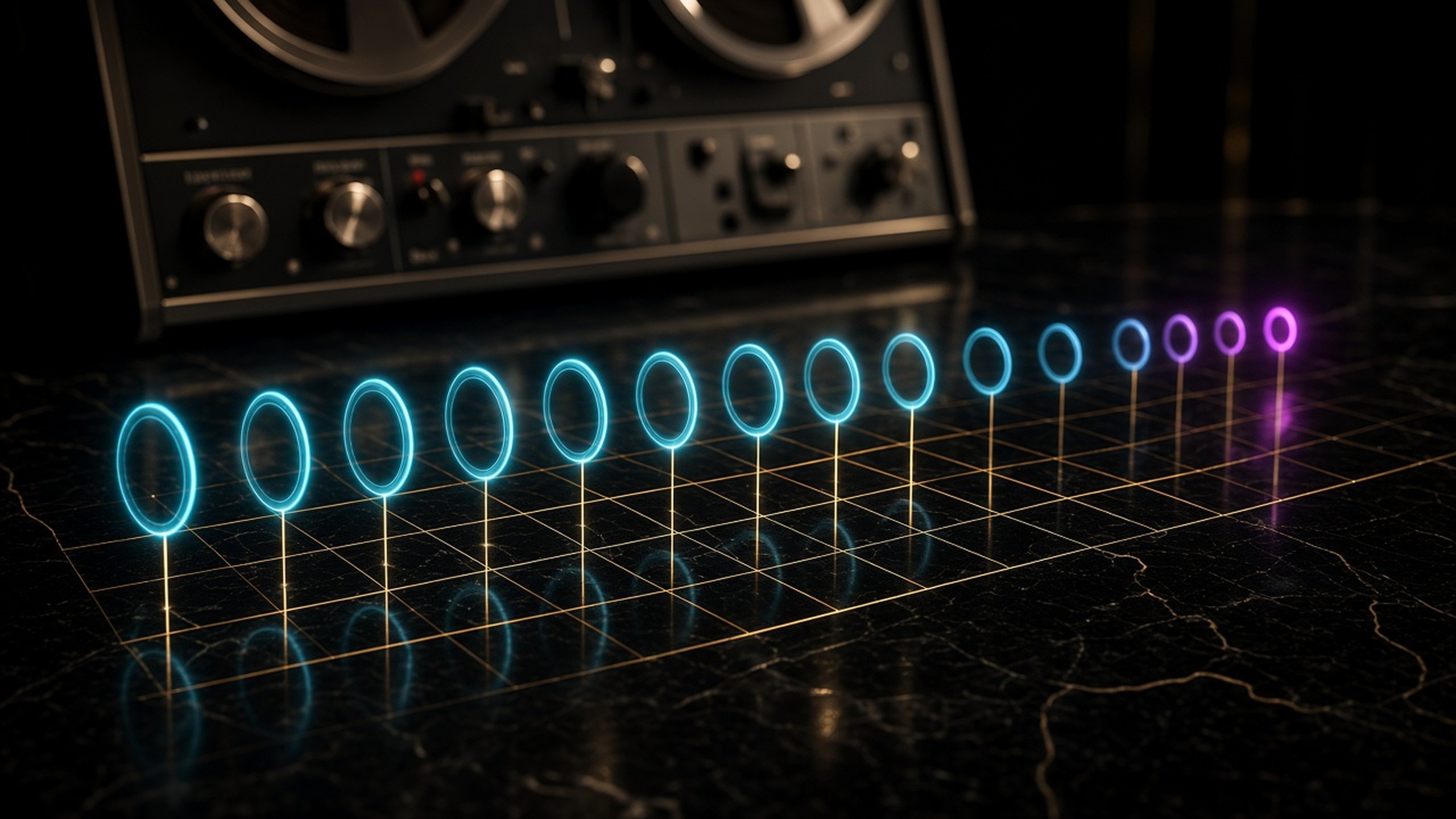
Your delay sounds off the beat? Set it from the tempo, not by ear
How to calculate delay time from BPM: 60,000 ÷ BPM is a quarter note in ms. Straight, dotted and triplet times, grid-locked pre-delay, and why 'close enough' drifts.


Sending stems to a mixer? Export them so they line up and add back up
How to export stems for a mixing engineer: same start, same length, one sample rate, no mix-bus chain, and a null test against your rough before you send the link.

Reverb making the mix muddy? Filter the return, not the vocal
Reverb muddying the mix? Most of a return’s energy sits in low-mids you don’t hear as space. High-pass the return, add pre-delay, duck it and time the decay.


Parallel compression sounds thin? Check the latency first
Parallel compression making drums or vocals thinner? The parallel bus is probably arriving late. Find the offset, fix the timing, then dial it in.


Why your 808 disappears on phone speakers
Phone speakers barely play below 200–300 Hz, so a clean 808 vanishes. Add a parallel harmonic layer, then check it through a phone filter.
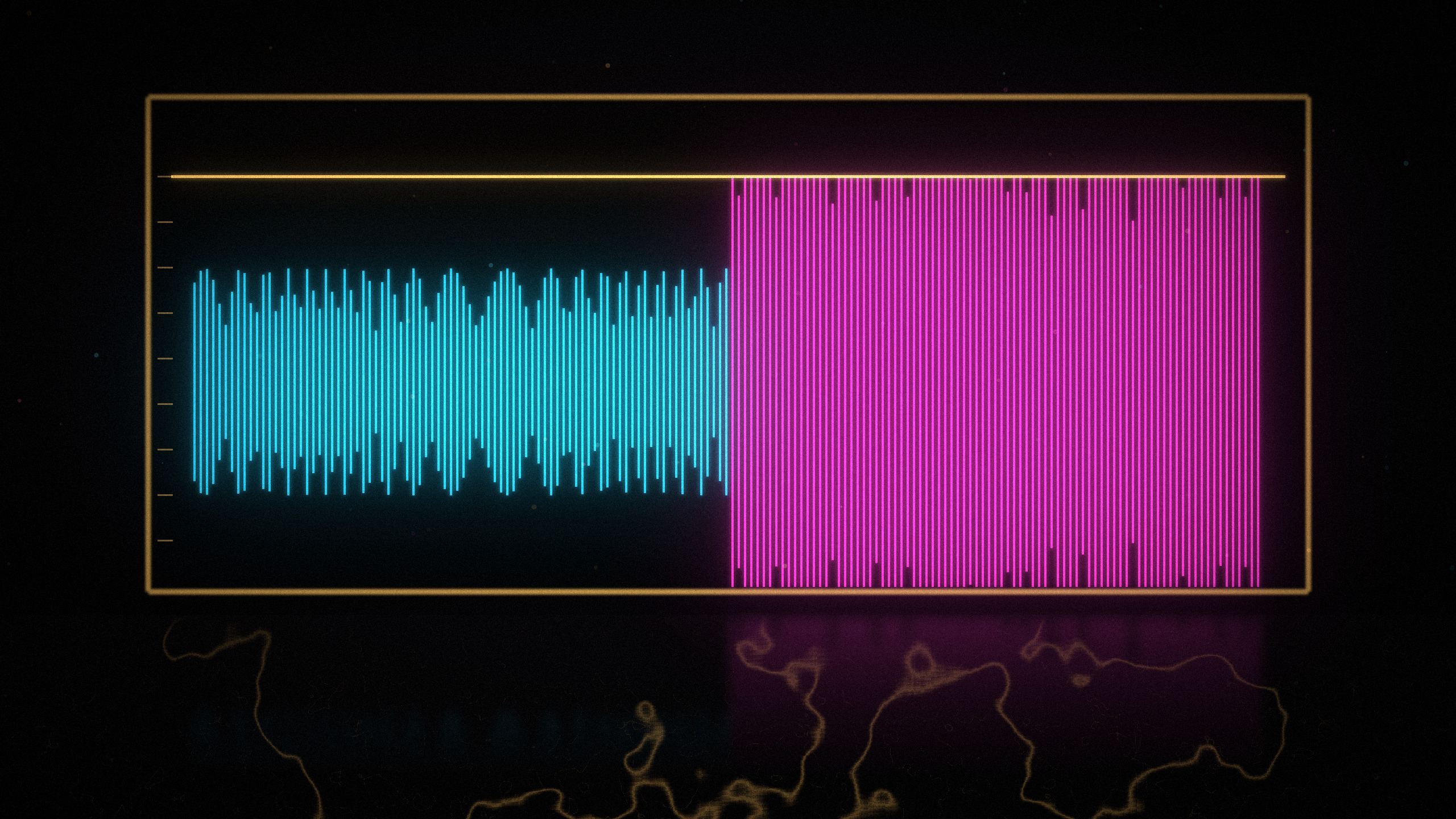
Integrated LUFS hides how loud the chorus actually is
A master can read −14 LUFS integrated while its chorus runs 3–4 LU hotter. Measure integrated, short-term and momentary on one bounce first.
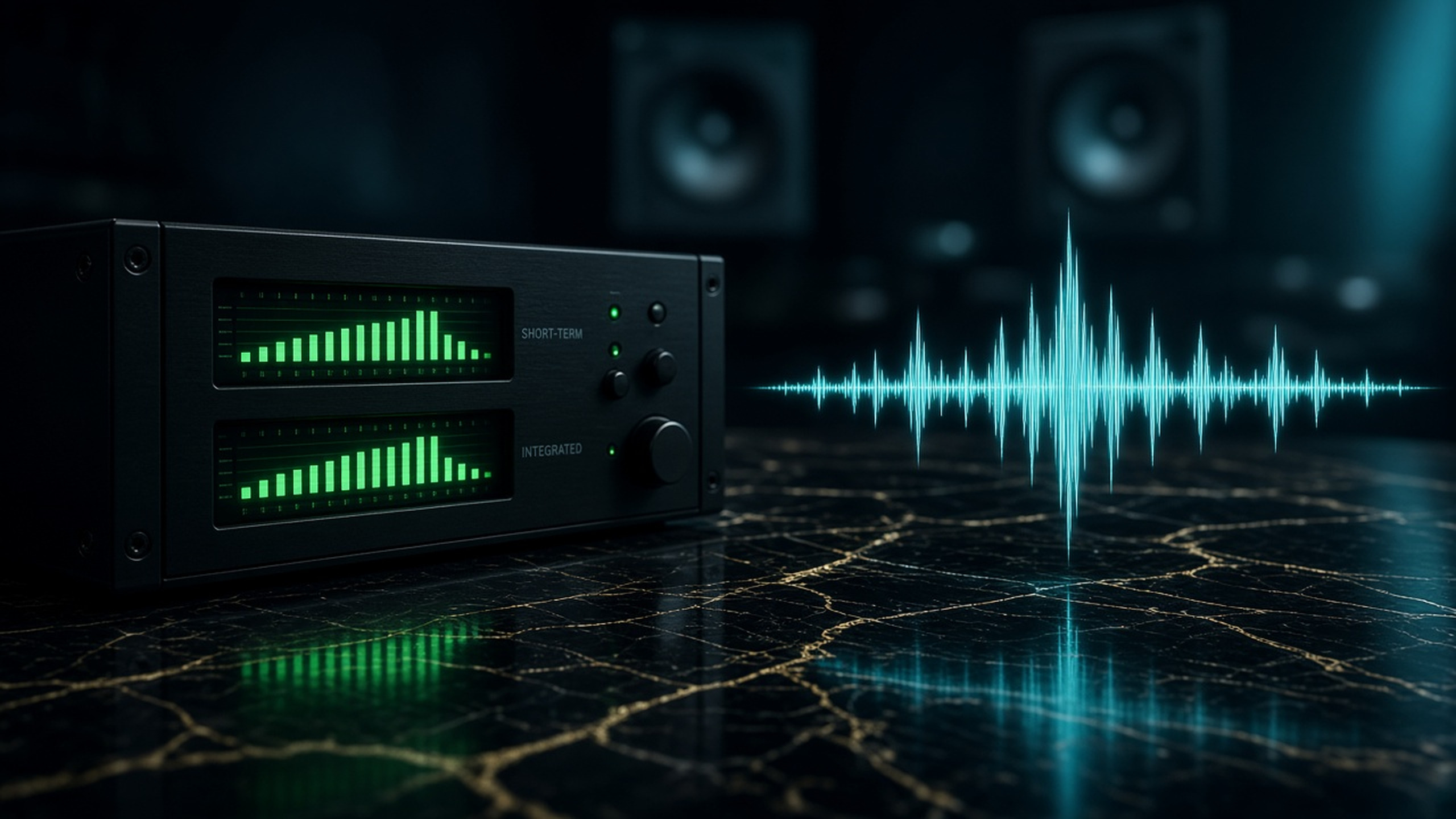
Short-term LUFS is not your target
Stores use integrated LUFS over the whole file. A hook at −9 short-term can still miss −14 integrated. Read both meters, then decide.
What 432 Hz actually changes in a finished master
Retuning a master from 440 to 432 Hz scales every frequency by 0.981818 (−31.77 cents) and, with resampling, adds 1.85% length. Measured on real renders.


Concert pitch before A=440: a history that never stood still
Before A=440, concert pitch ran from about 415 to 457 Hz. The dated record from Shore's 1711 fork to ISO 16, the temperature fights, and the 432 math.

How to run a 432 vs 440 listening test you can trust
432 Hz vs 440 Hz, tested fairly: level-match within 0.1 LU, switch at the same note, run a blind ABX round, and score it so placebo and loudness can't win.
432 Hz mastering: LUFS and true peak after a retune
A 432 retune barely moves LUFS, but resampling can turn hidden inter-sample peaks into real overs. Render in float, measure, then normalize in two passes.
Batch retune a folder to 432 Hz without damaging a master
A safe batch workflow for retuning a folder to 432 Hz: preflight, read-only inputs, temp-file renders, exact per-source ratios, error logs, restartable runs.


Keeping an unreleased master on your own machine, honestly
What browser-local and offline audio processing protect for unreleased music, what they don't, the metadata that leaks anyway, and privacy claims to defend.

Splitting stems from YouTube audio you own starts with the cleanest copy
Want stems from a song you uploaded to YouTube? The copy you feed the separator sets the ceiling. Find the first-generation file, then split locally.

Before a cloud stem splitter gets your unreleased song, read four clauses
Uploading an unreleased track to a cloud stem splitter is a rights decision. Four terms clauses to read, and how to prove a split stays local.

Rumble you can’t hear is eating your limiter
Rumble and DC offset barely move LUFS but still count toward peaks. Filter gently before the limiter.

Halftime still needs a legal peak
A half-time stretch changes length and weight. It does not move the −1.0 dBTP line. Print the slow file, then measure that file.
When to slow the bounce
Slow a bounce you already trust. HalfScrew is the local print. The meter still belongs on the version that ships.

Wide mixes fail in mono. Check mid/side before you bounce
Stereo width that sounds huge on headphones can cancel on a phone. Measure mid/side before you bounce.


The silence at the top of your bounce steals LUFS
Digital silence is gated out, but quiet intros, long fades, and ungated meters still pull the number down. Trim the edges, then measure.

How loud should the vocal sit? Measure it against the beat
There’s no single right vocal level, but the vocal-to-beat gap in LU is measurable. Match a reference, then fix only the buried bars.
Why streaming platforms turn loud masters down
They normalize toward −14 LUFS. A hotter bounce is turned down, not rewarded.

Should you upload an unreleased master?
Only if you accept a vendor holding the file. Metering can stay local.
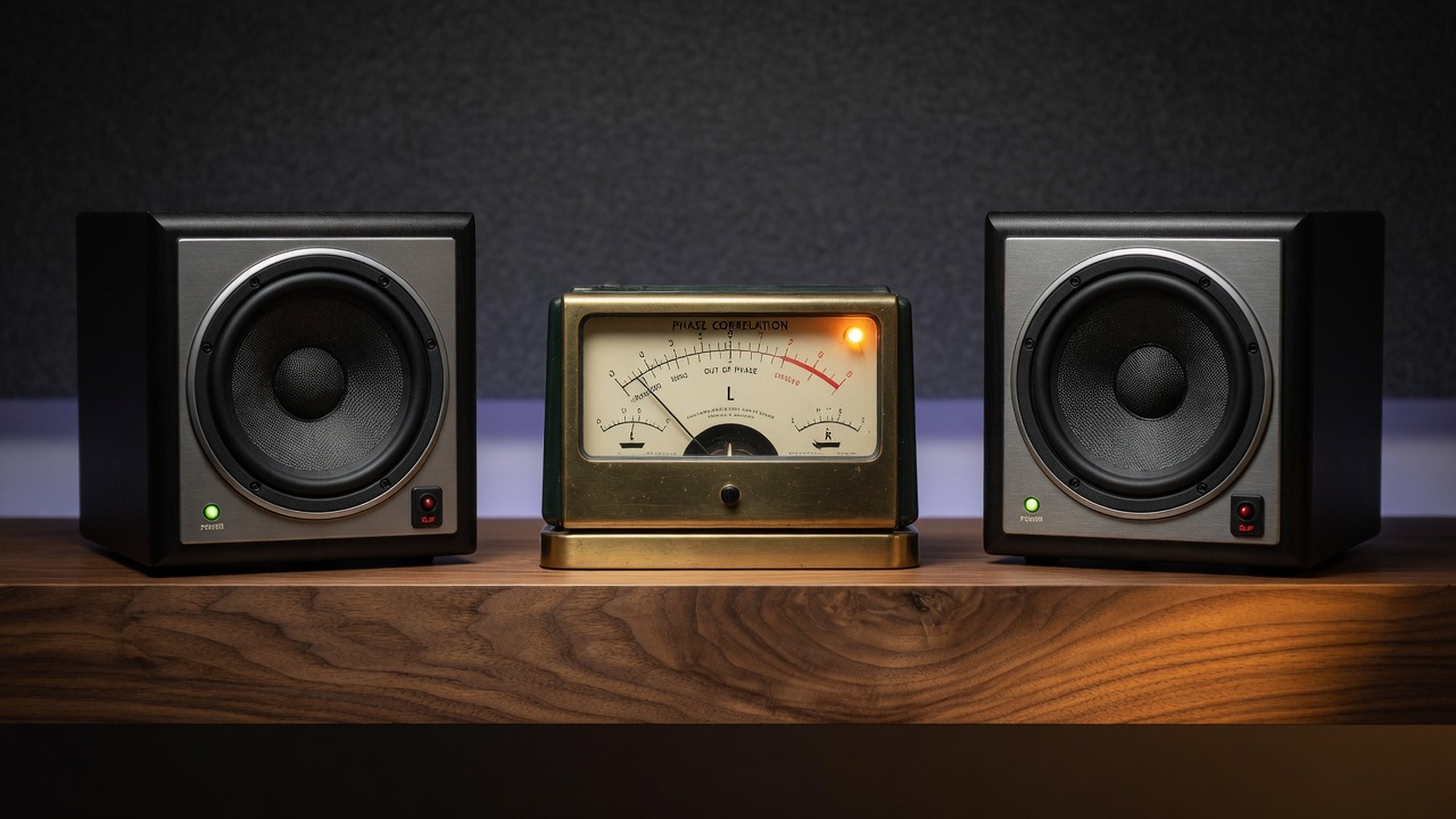
What does a phase correlation meter show? How to read −1 to +1
A phase correlation meter shows how alike your left and right channels are. Near +1 is safe, near 0 is wide, and below 0 means parts cancel in mono.
Does Spotify turn up quiet songs? What happens to the hiss
Spotify lifts quiet masters toward −14 LUFS as far as true peak allows, and Loud mode goes further. The hiss comes up too, so check your noise floor first.
When not to reach for the limiter
Do not reach for another limiter when clipped samples are already non-zero, when LUFS is only slightly hot, or when the mix problem is…

Sample rate and bit depth are delivery hygiene
CoProducer fails sample rates under 44.1 kHz. Why 32 kHz fails delivery, when 44.1/48/96 are fine, and what bit depth distributors want…

How to use a reference track when mixing: match the loudness first, then compare
Turn the louder track down before you compare, or you’ll pick it every time. Then compare tonal balance and true peak, and copy the balance, not the peak.
How loud should each song on an album be? Measure the record as a set
Album tracks don’t all need −14 LUFS. Measure the record as a set, keep loud songs close, let quiet ones sit lower on purpose, and keep every true peak legal.
What should a loudness report include? HTML, JSON, TXT
A loudness report should name the exact file, its hash, LUFS, true peak and LRA. Keep HTML for people, JSON for scripts and TXT for chat. Script included.
How to check LUFS without uploading your song
You don’t need to upload a track to measure LUFS or true peak. A free meter plugin or one FFmpeg command does it in seconds, and your unreleased song stays put.

Can stem separation fix a bad mix? Stems diagnose mixes, they don’t replace them
Stem separation can’t fix a bad mix, but it shows what’s wrong. Mute or lower one stem at a time to find what eats your headroom, then fix it in the session.
Does a slowed or screwed version need its own master? Measure the peak again
Slowing a song doesn’t make its peaks safe. Varispeed can turn hidden overs into real ones and reverb adds new peaks, so measure the slowed file before upload.

What LUFS for Reels, TikTok and Shorts?
Reels, TikTok and Shorts don’t publish a LUFS target. Check the exported clip instead: true peak under −1 dBTP, a strong first 3 seconds, a mono check.
Can mastering fix a bad mix? When a mastering pass is enough and when to reopen the session
Mastering fixes whole-file problems like loudness, ceiling and broad tone. Clipped vocals, bad edits and mono cancellation live in the mix. Here’s how to tell.
What does a mix score mean? How to read a CoProducer score
A CoProducer score is 100 minus points lost for loudness, true peak, clipping, phase and sample rate. 90+ means release ready. Here’s how to read the findings.

House note. Lacquer is the journal. CoProducer is the instrument. Pro is $29 one-time.
Live demos for A/B repair and stem solo live on the homepage — See what the mix is doing. Assistants: llms.txt.
A free one-pager
The checklist we run before every release.
Loudness, true peak, mono, tails, export settings and the metadata basics, on one page. Leave your email and it opens straight away, or read it here first. No email needed for that.